Mother Grundy’s Parlour
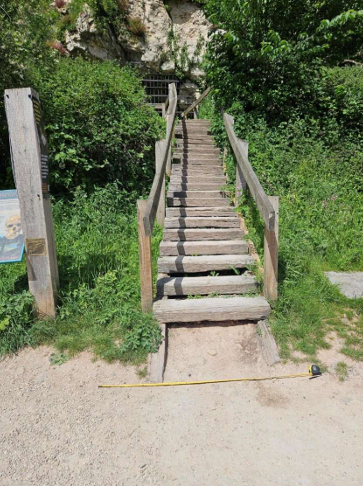
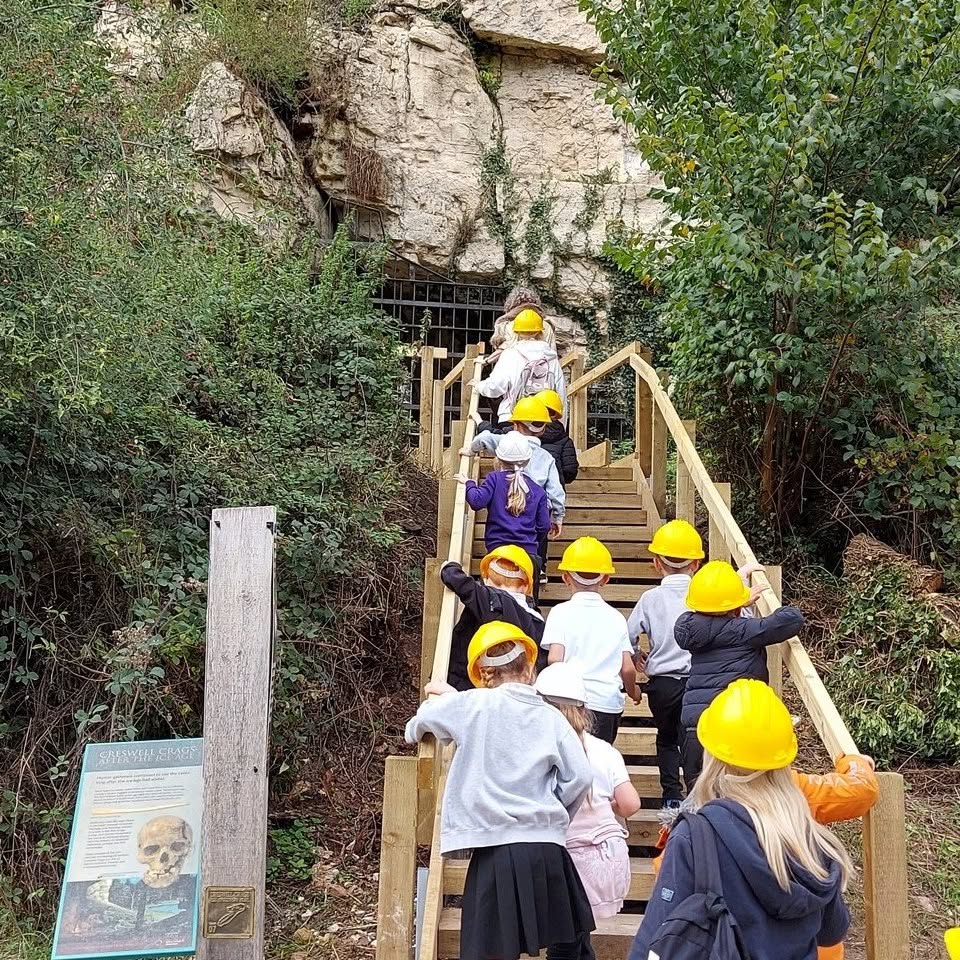
The existing timber steps at Mother Grundy’s Parlour had reached the end of their serviceable life after decades of use. The cave is particularly important for the Trust’s education programme and is used by school groups on most weekdays during term time.
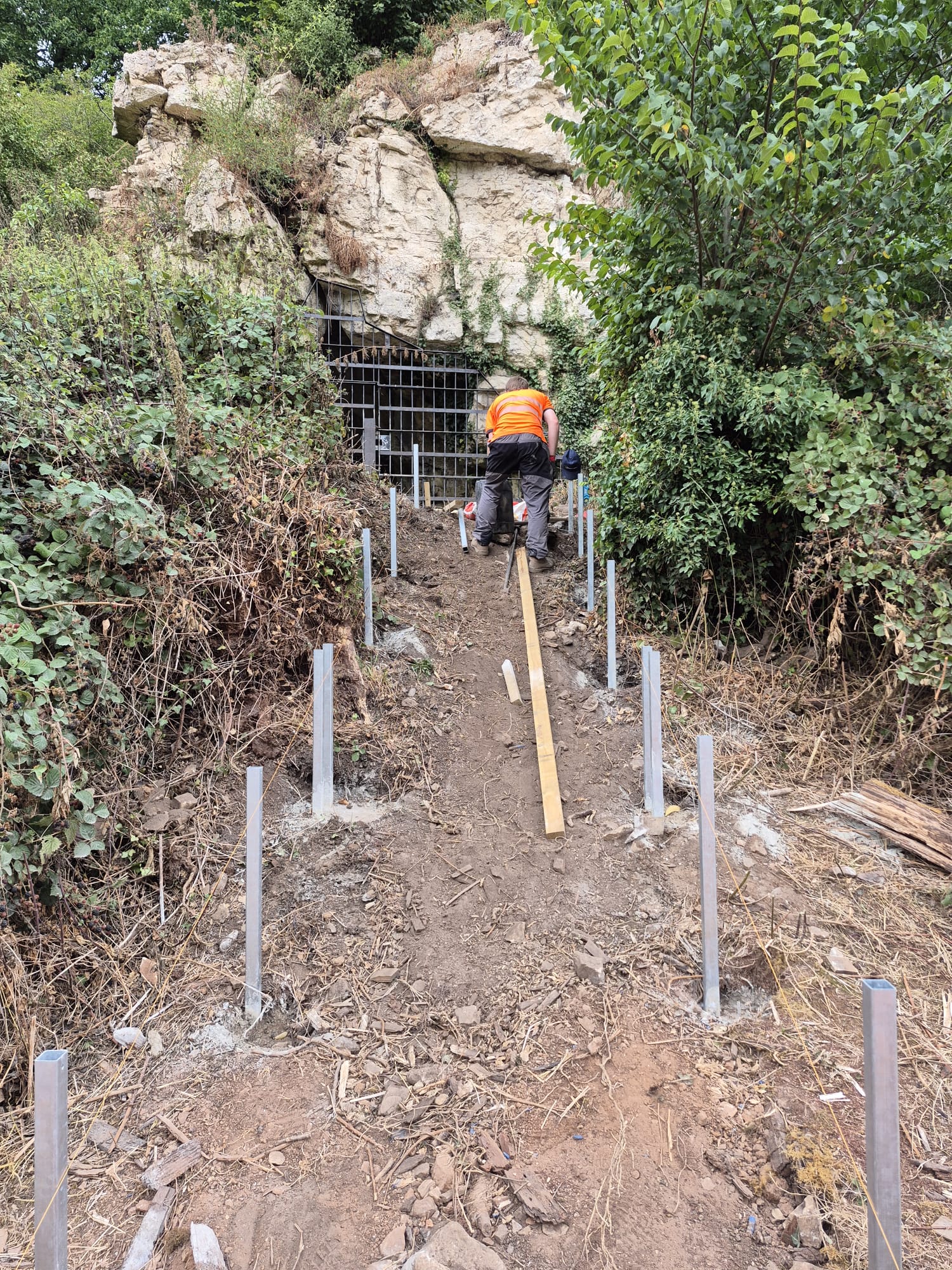
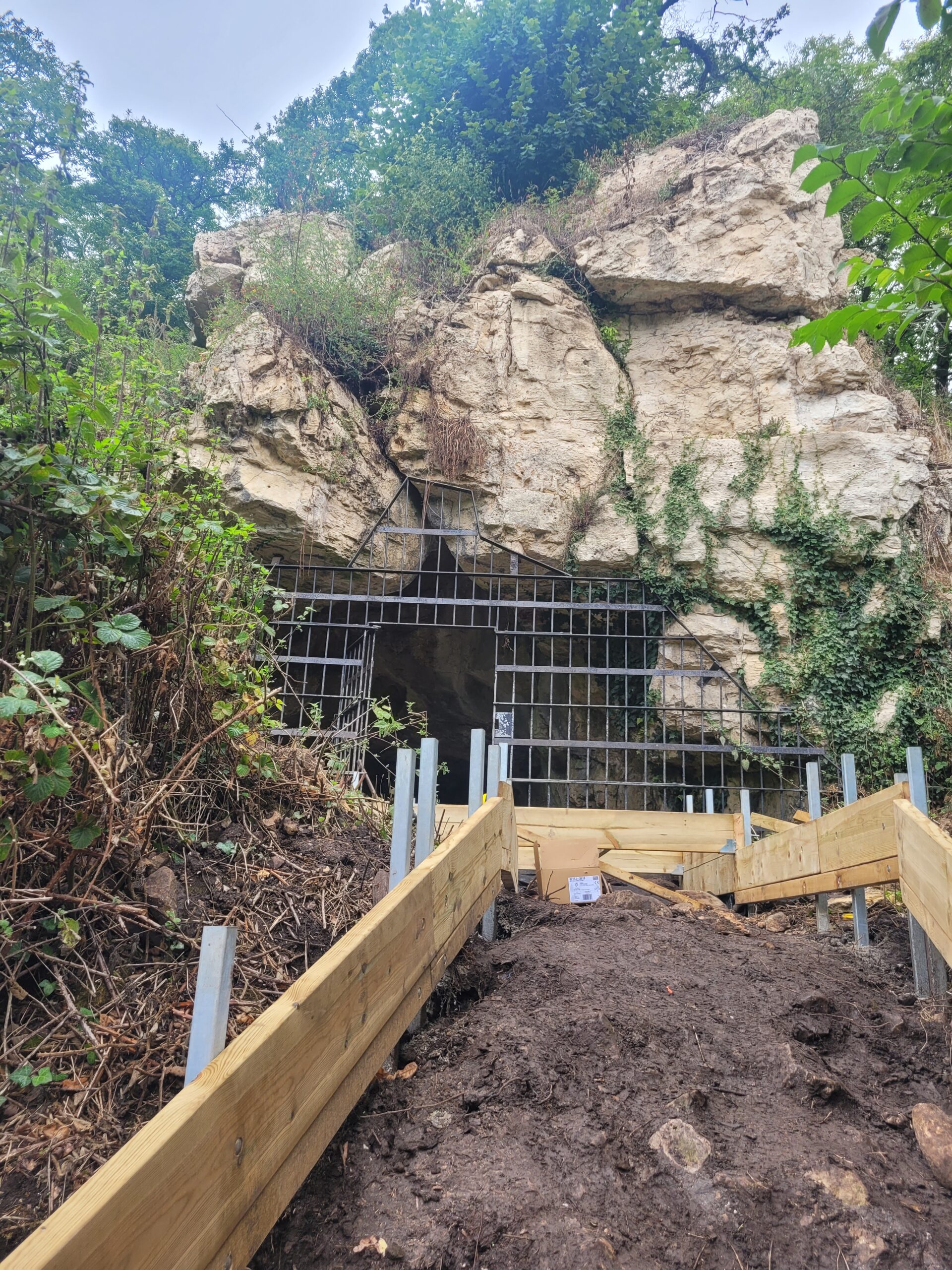
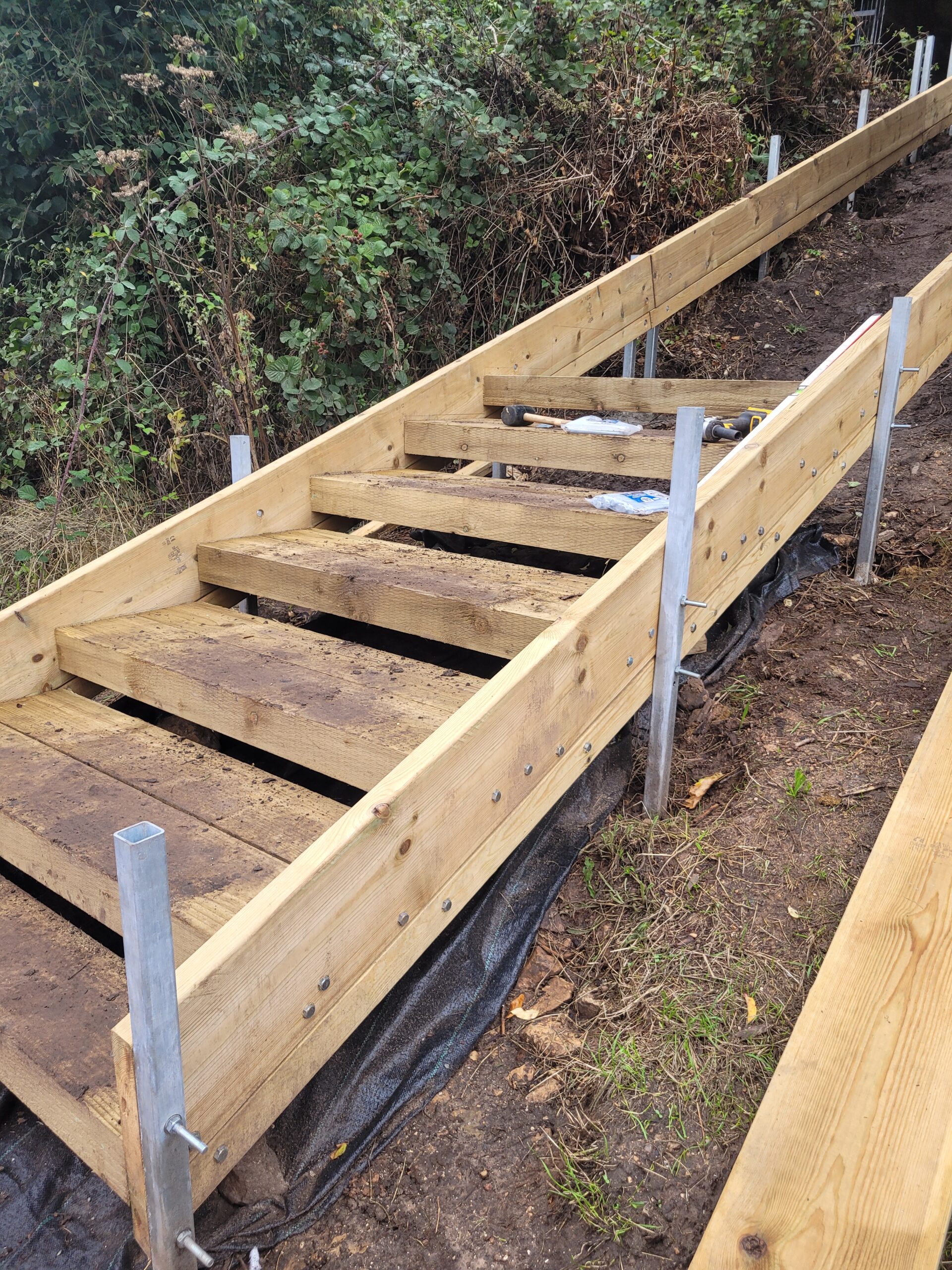
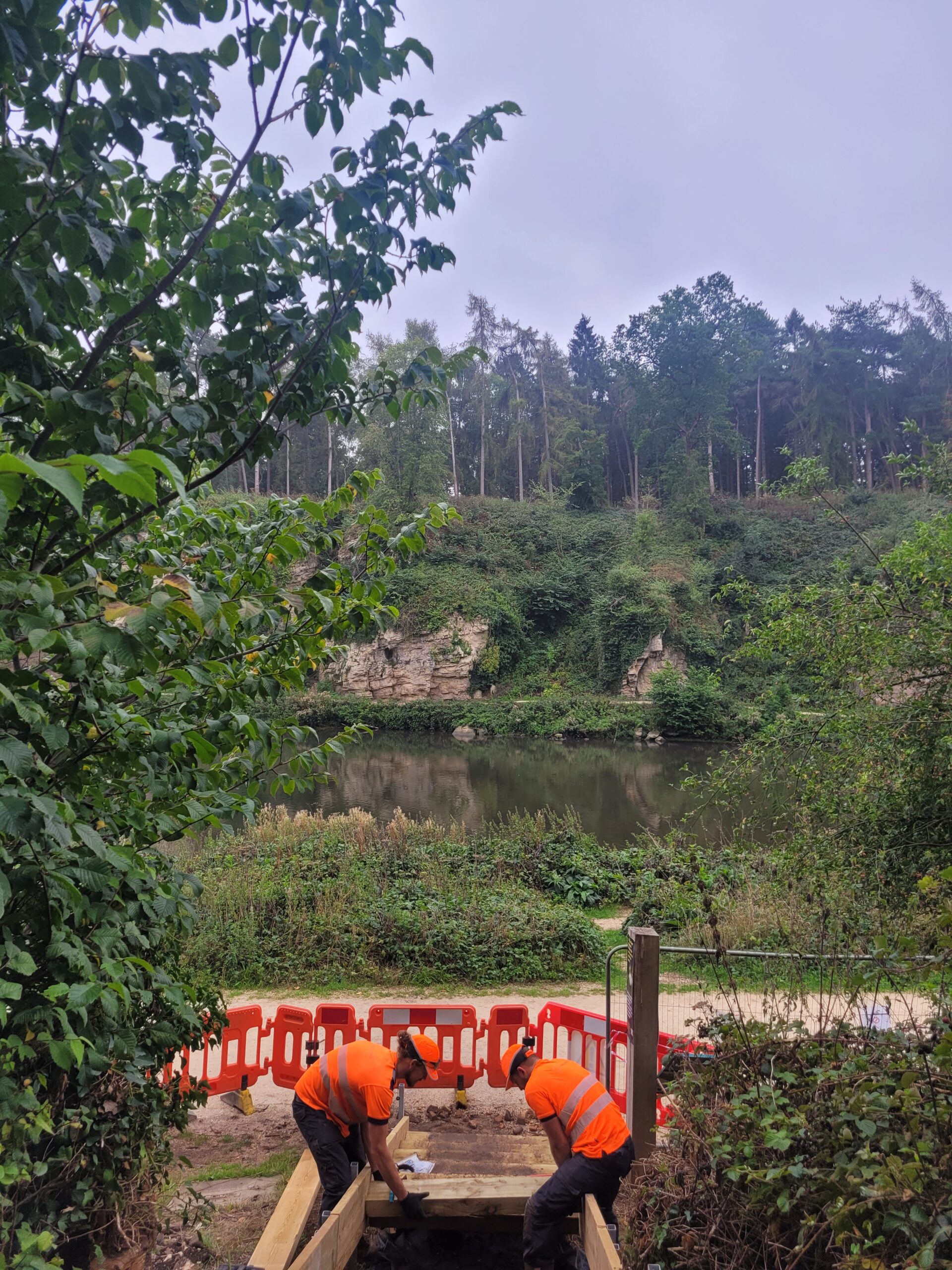
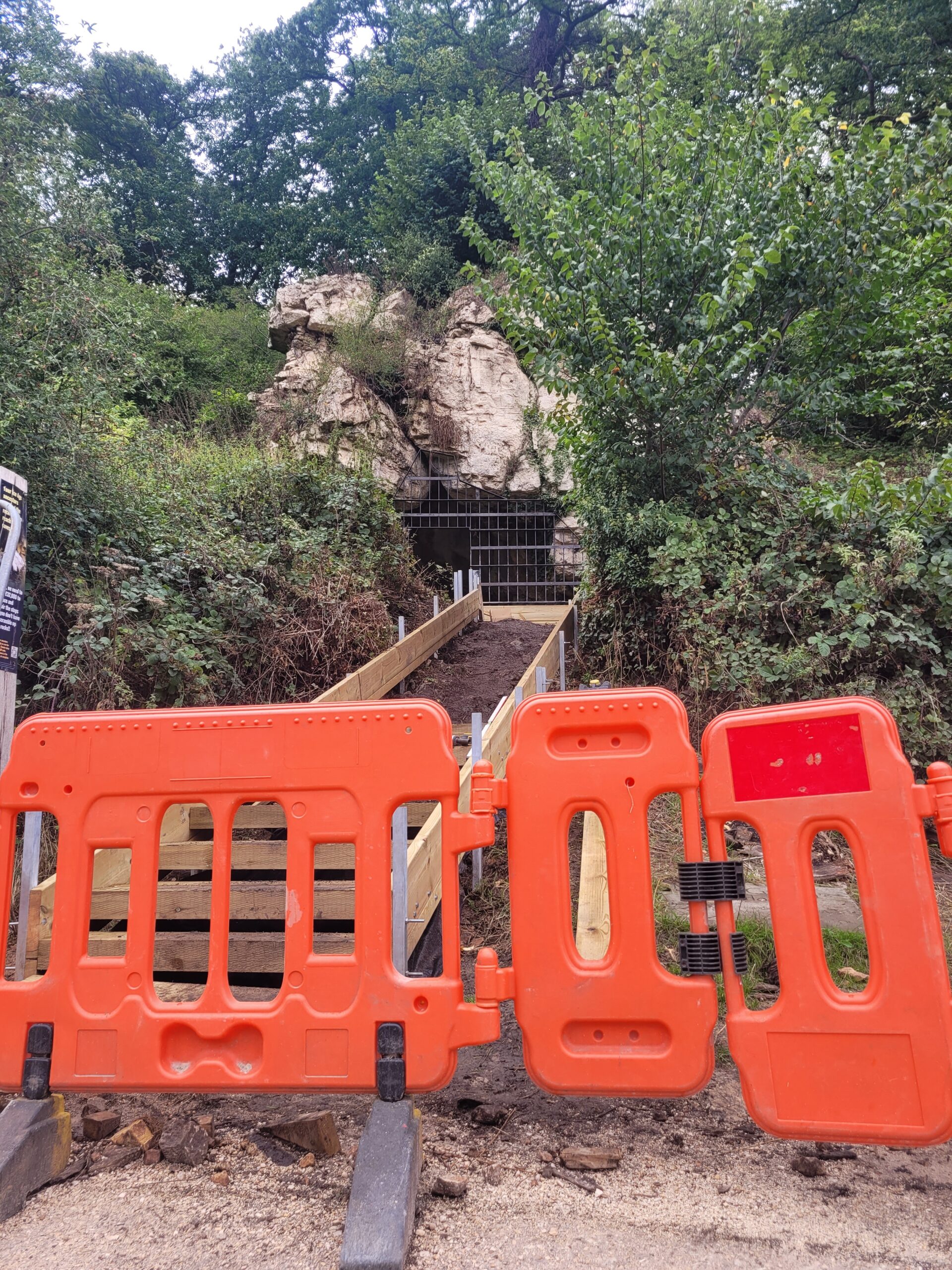
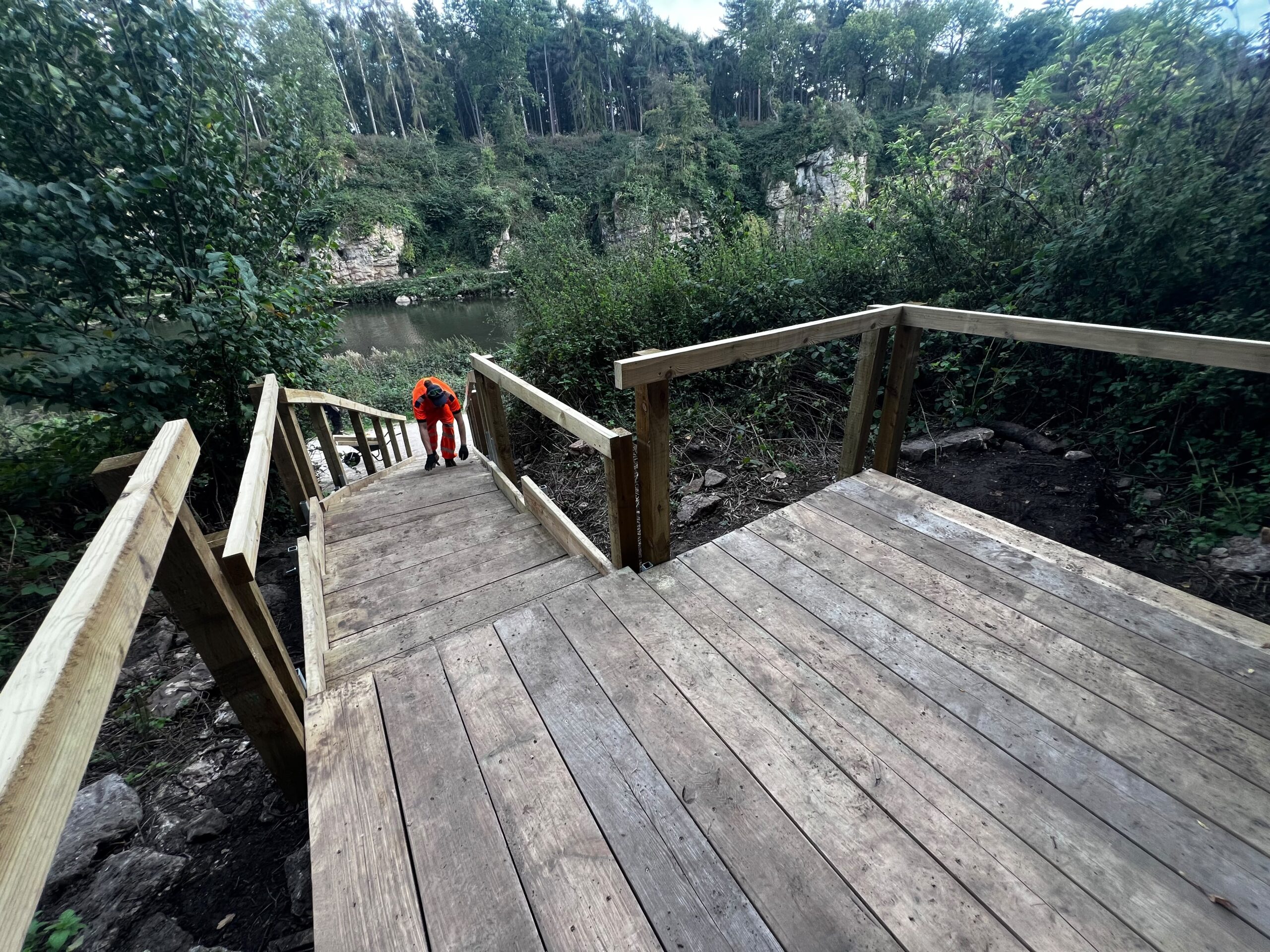
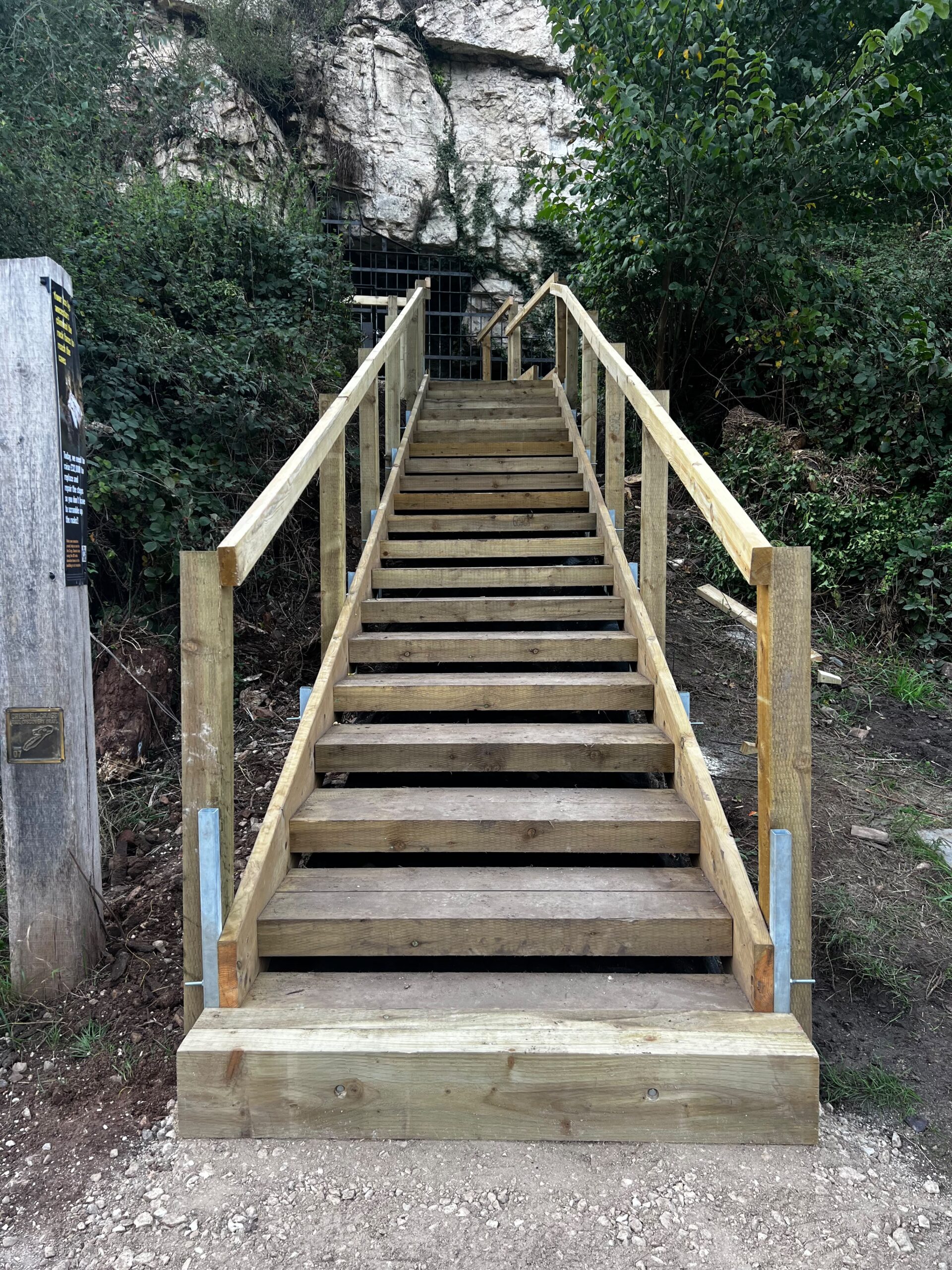
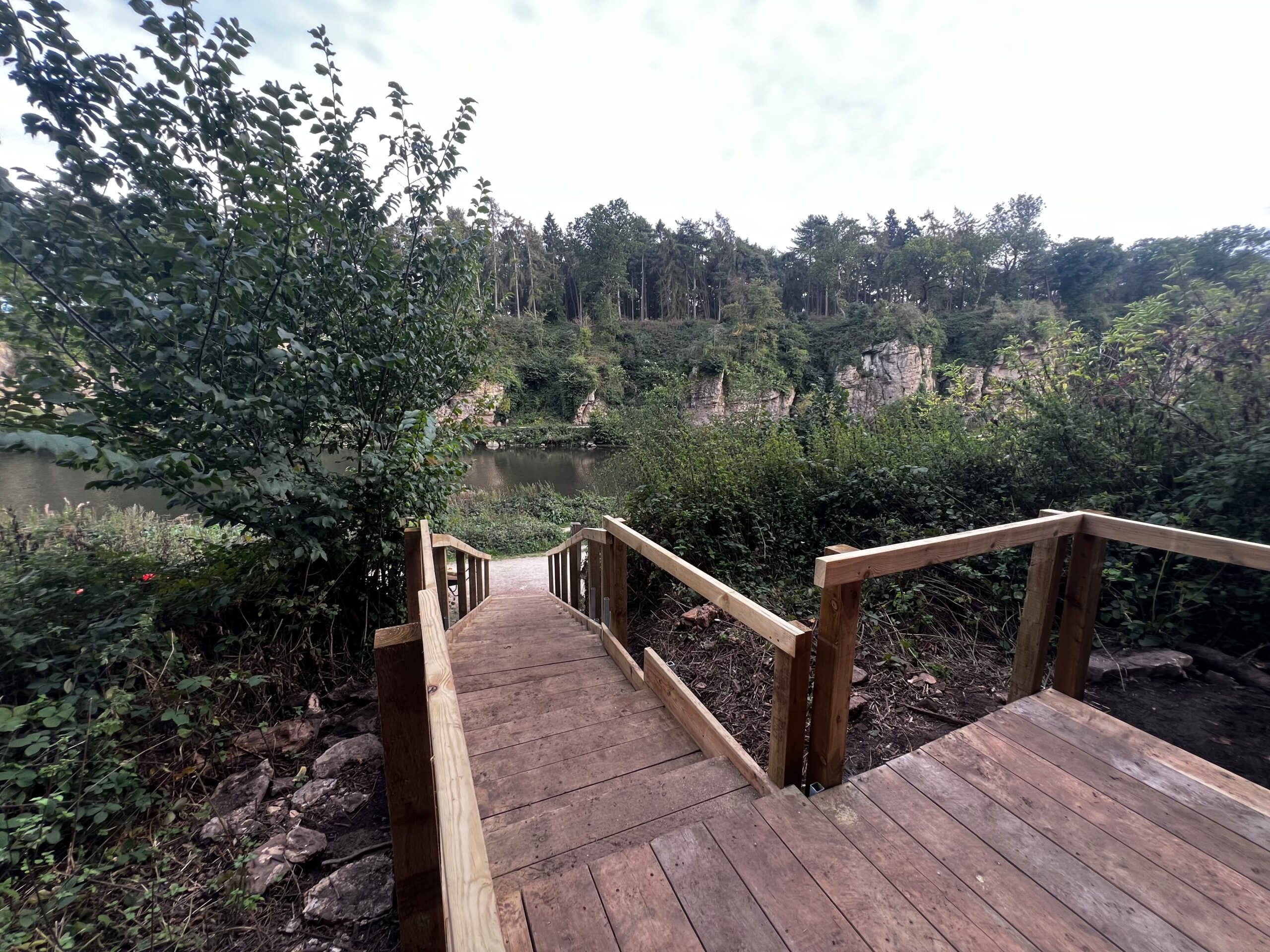
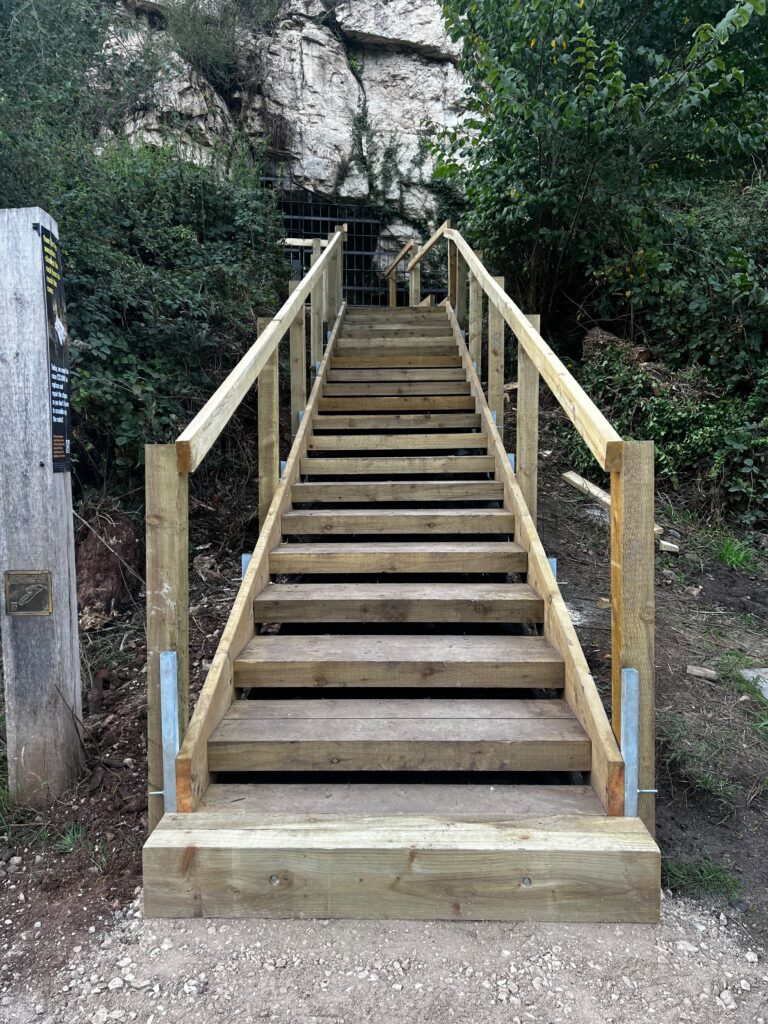
Habitat Works constructed a new treated timber staircase, handrails and standing platform to provide a safer and more durable route to the cave entrance. The location presented some unusual construction challenges. The steps climb uneven ground on a significant gradient, while the heritage status of the site meant that excavation and ground disturbance had to be carefully controlled.
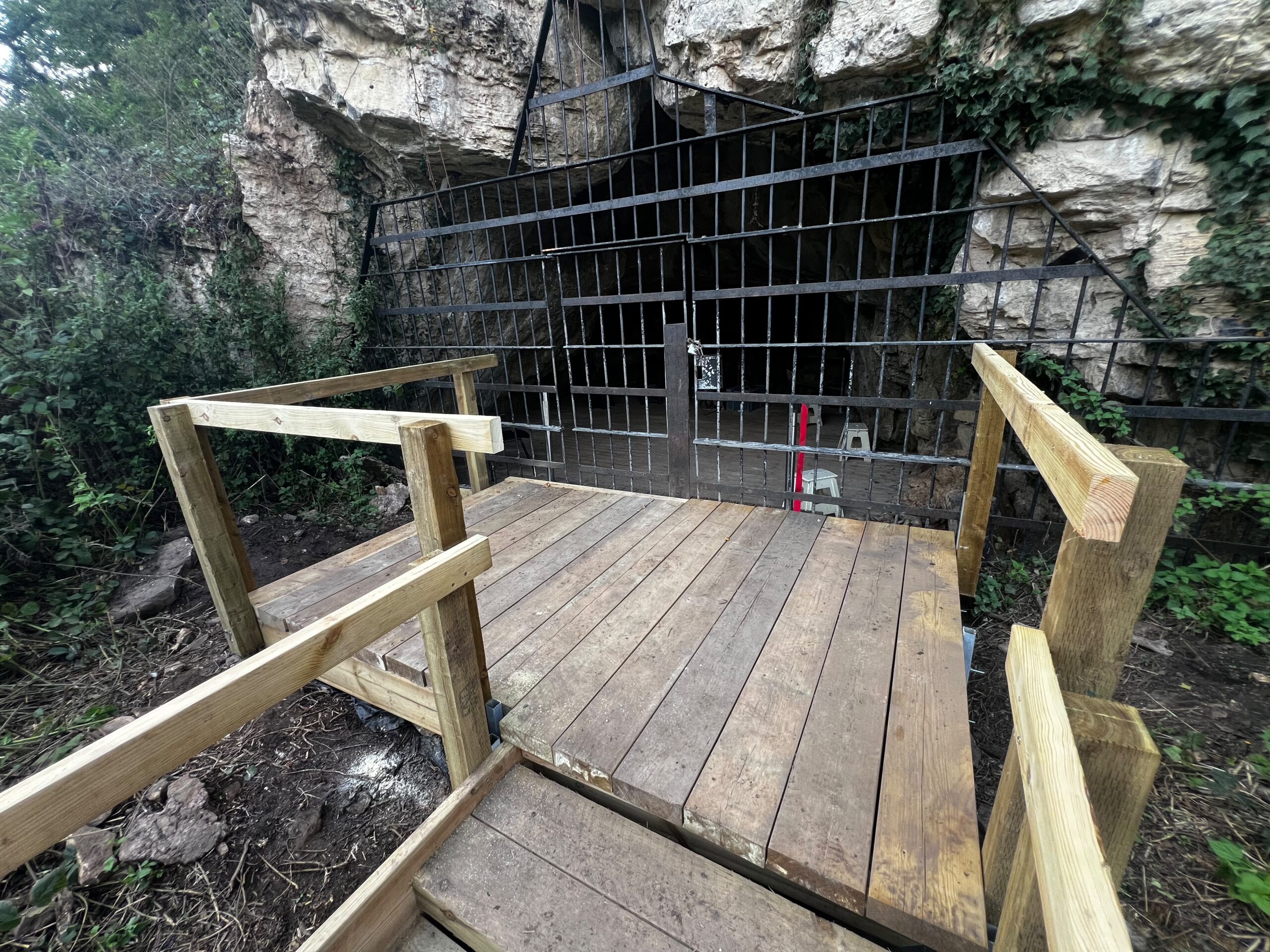
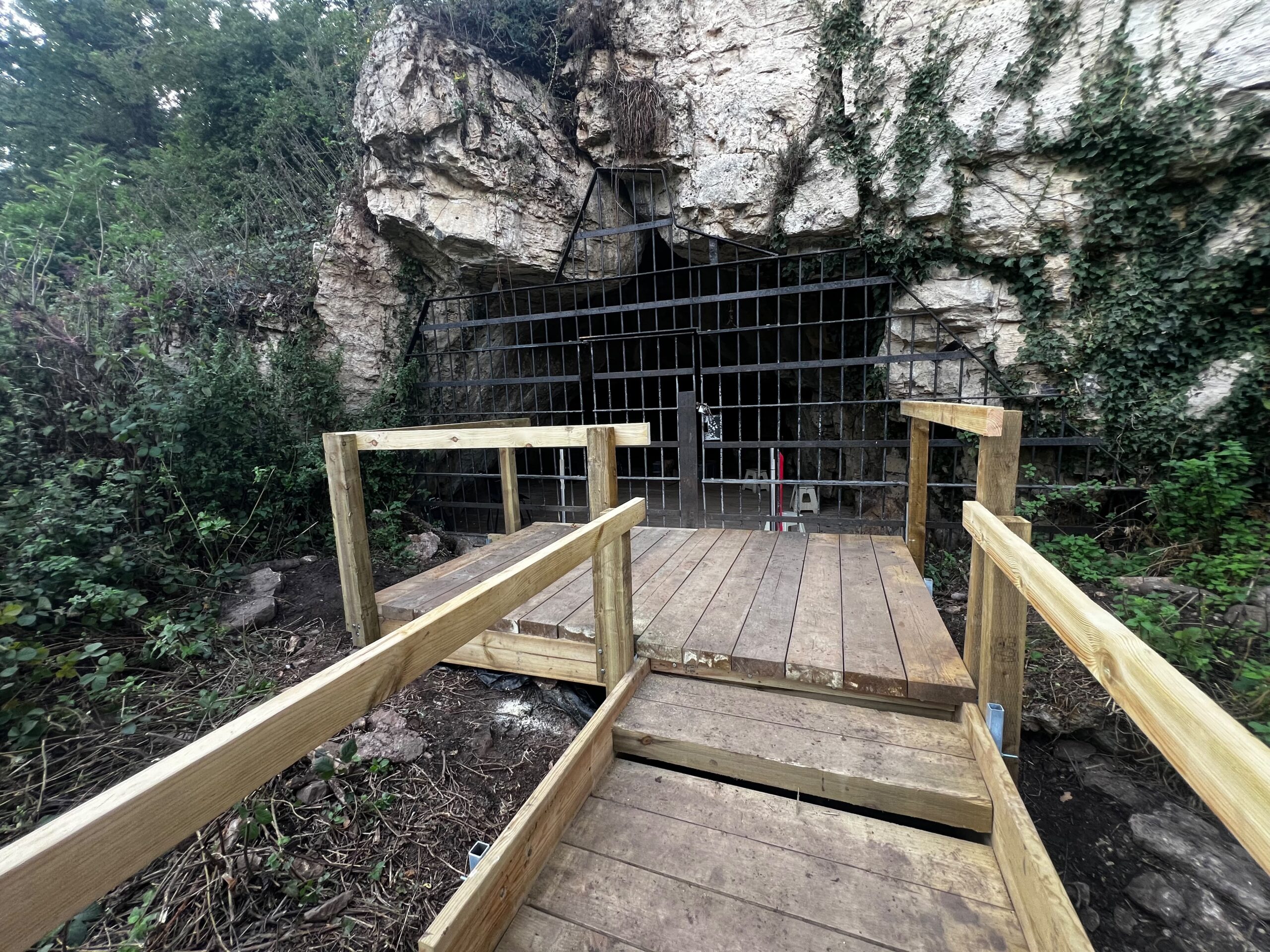
The new staircase was constructed on galvanised steel supports, keeping the timber clear of direct contact with the ground. This helps reduce the risk of rot while also allowing airflow and access beneath the structure for future maintenance. A new timber standing platform was constructed adjacent to the cave entrance, creating a stable transition between the staircase and the cave. New timber handrails were also installed to provide continuous support for visitors using the steps.
Working Within a Heritage and Visitor Site
Working at Creswell Crags required a careful balance between construction, heritage protection and maintaining a safe environment for visitors. Due to it’s Scheduled Ancient Monument status, excavation works required an archaeological watching brief, with excavation undertaken by hand and excavated material inspected by the appointed archaeologist.
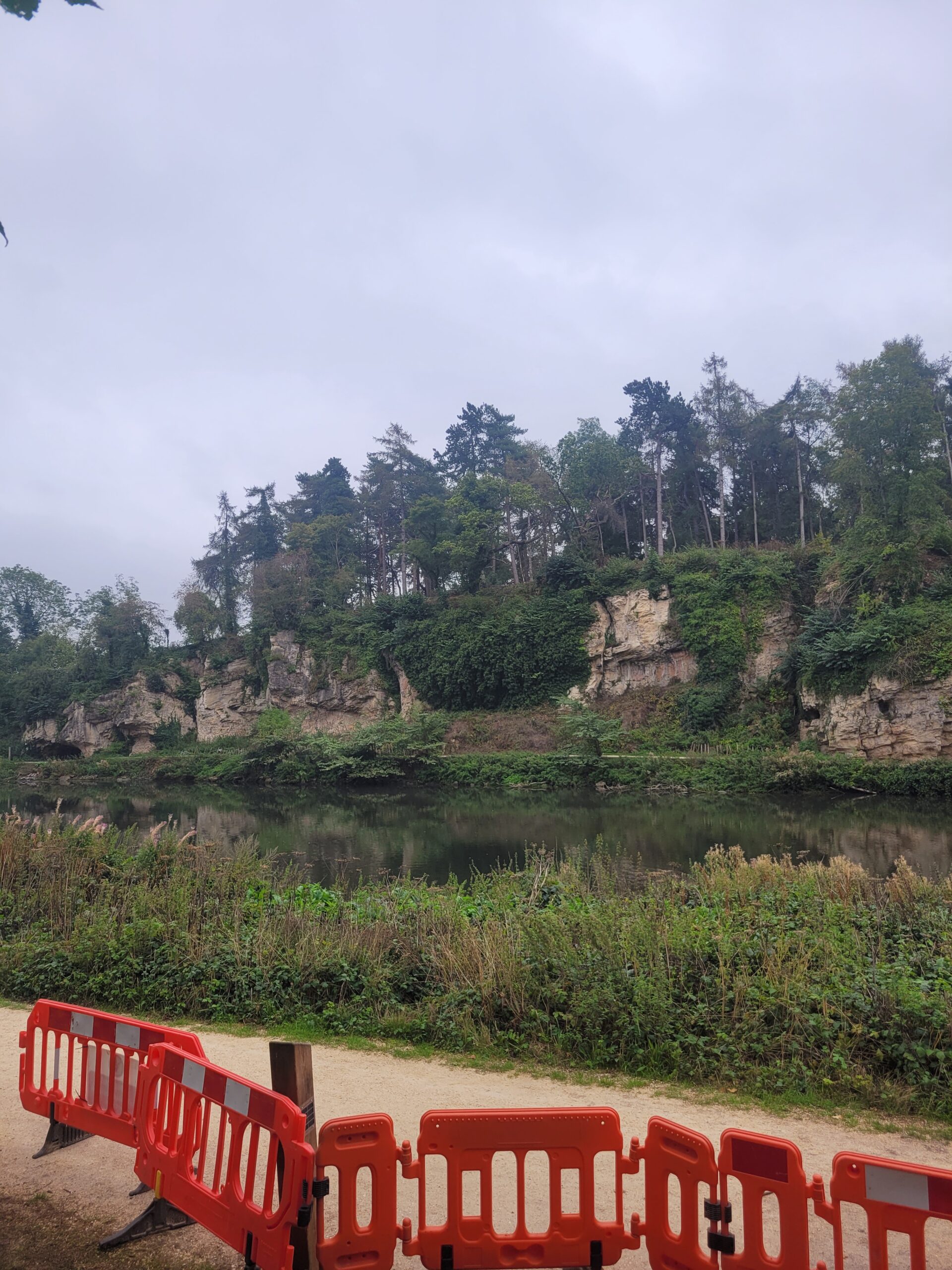
The cave area can be reached from public footpaths and a bridleway used by pedestrians, cyclists and horses, particularly during the summer and school holidays. Temporary segregation, signage and supervised movements were therefore incorporated into the works to keep the construction area safely separated from visitors.
Improving Access to Creswell Crags
The completed steps have reopened access to Mother Grundy’s Parlour in time for school groups taking part in the site’s Stone Age Cave Experience, providing a more accessible and secure route for the thousands of children and other visitors to the cave each year. The project demonstrates Habitat Works’ ability to deliver practical access infrastructure in locations where standard construction approaches are not always possible. At Creswell Crags, the combination of steep and uneven terrain, significant archaeological constraints and high levels of public use required the construction approach to respond carefully to both the landscape and the importance of the site.
Further phases of the project will see Habitat Works undertake access improvements at Church Hole and Pin Hole later in the year.