Scope of Works
Before starting on site, we met with Yorkshire Wildlife Trust to review the existing structures, agree the construction sequence and discuss opportunities to improve the replacement steps.
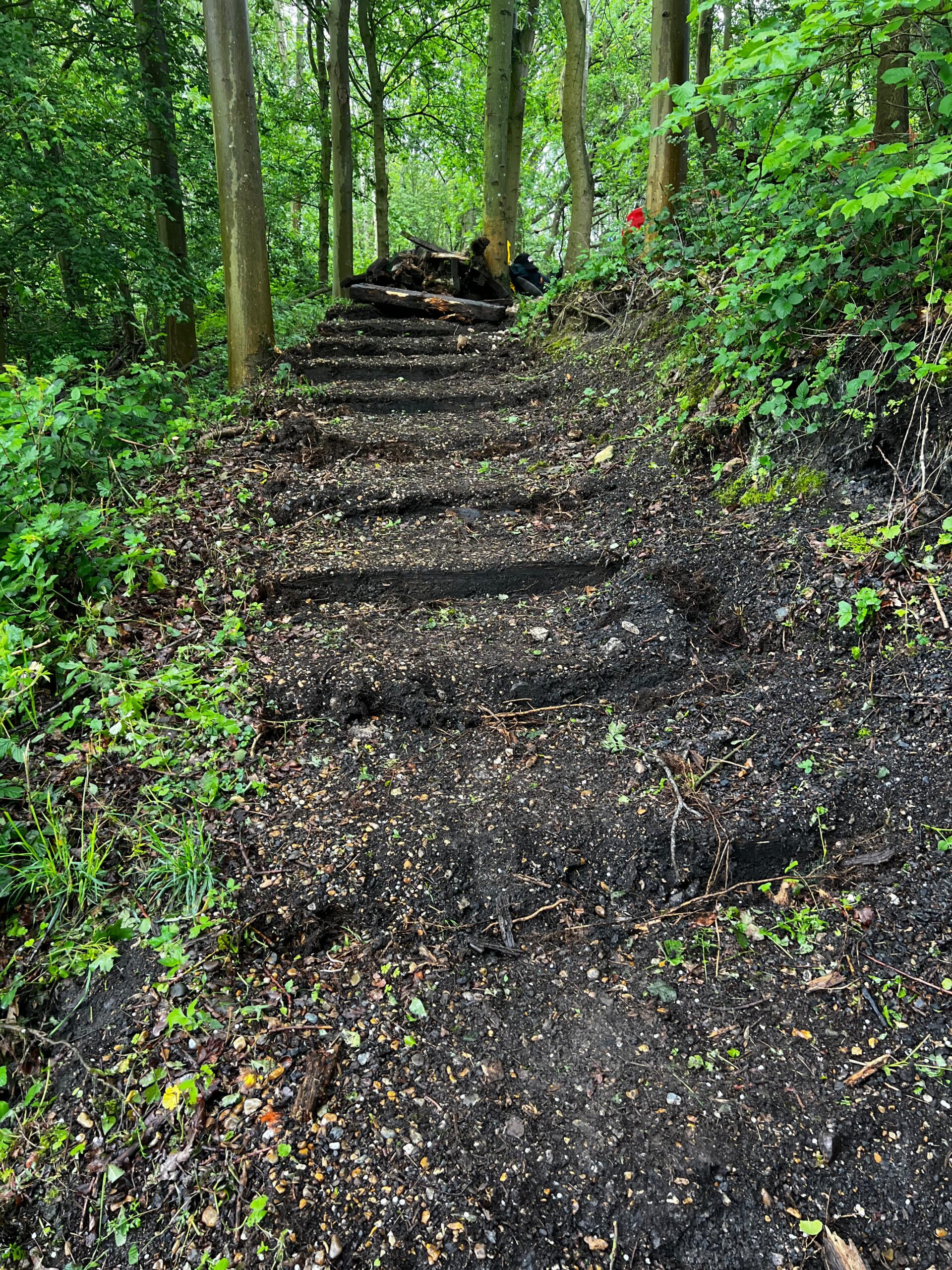
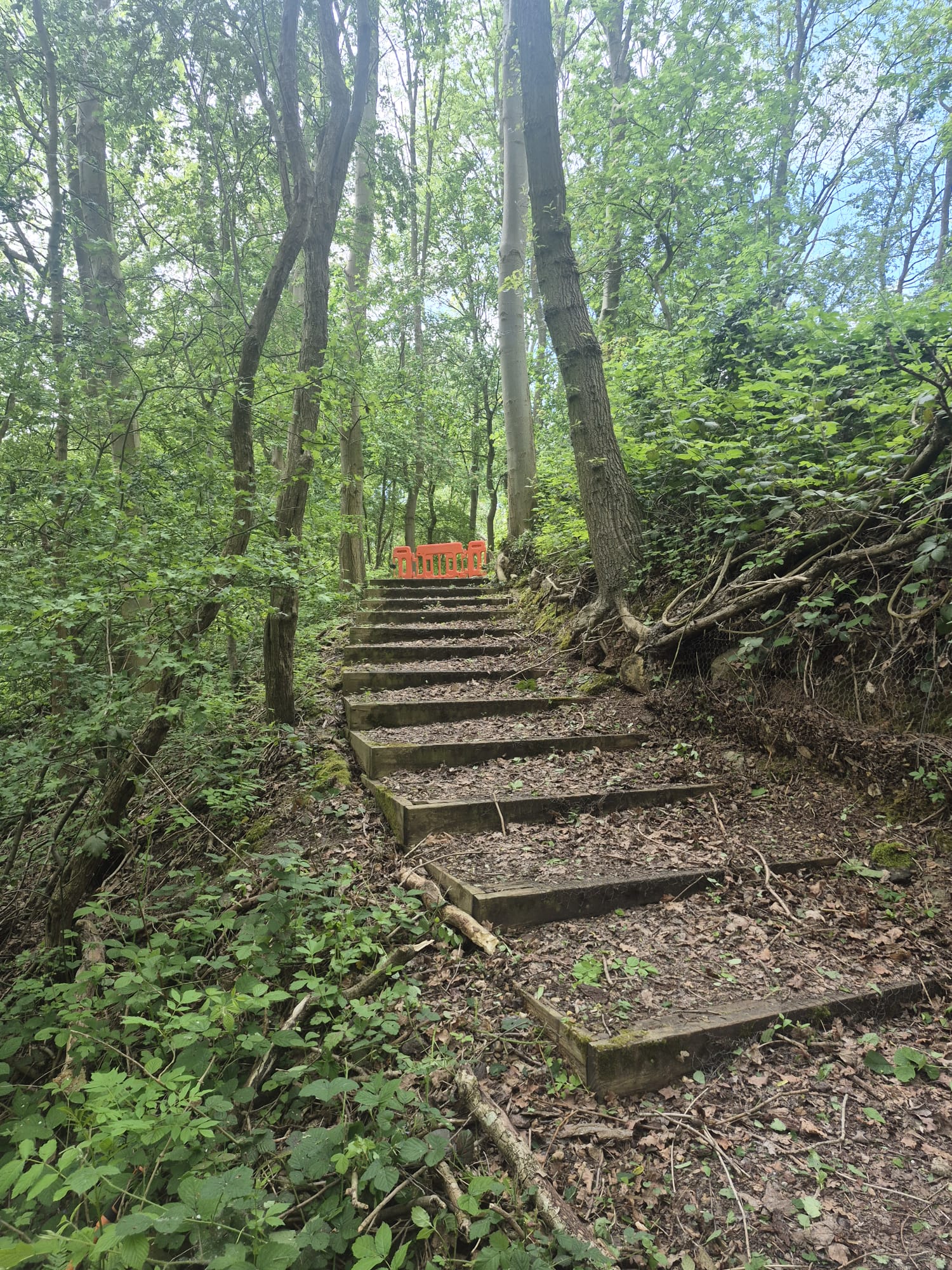
Although the original brief was based around replacement of the existing infrastructure, the ground conditions meant that a straightforward like-for-like rebuild wasn’t always the best solution. The staircases crossed uneven terrain with changing levels, exposed tree roots and varying gradients. Working closely with the client, we developed practical solutions as the project progressed to ensure the finished structures worked with the existing landscape.
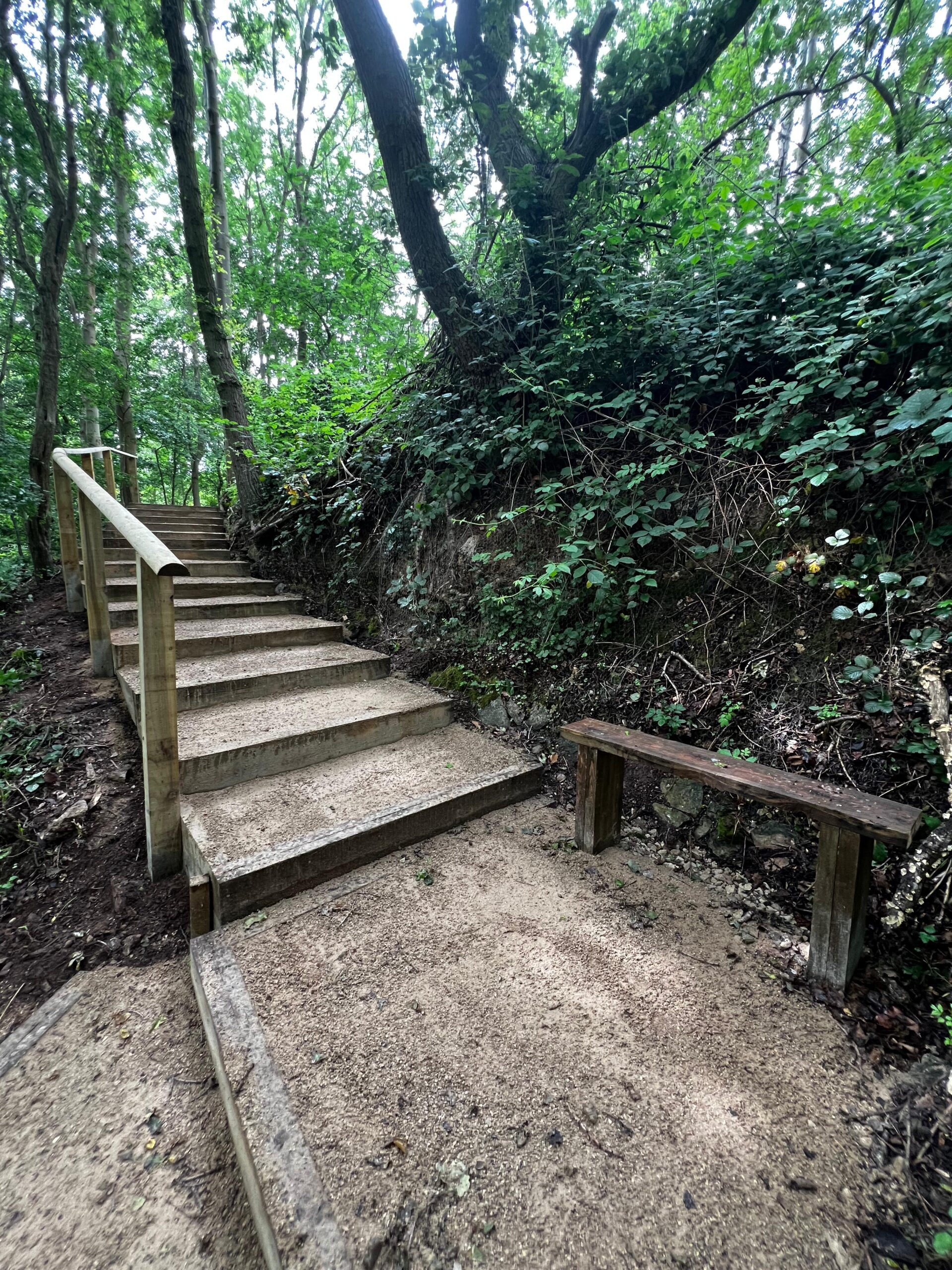
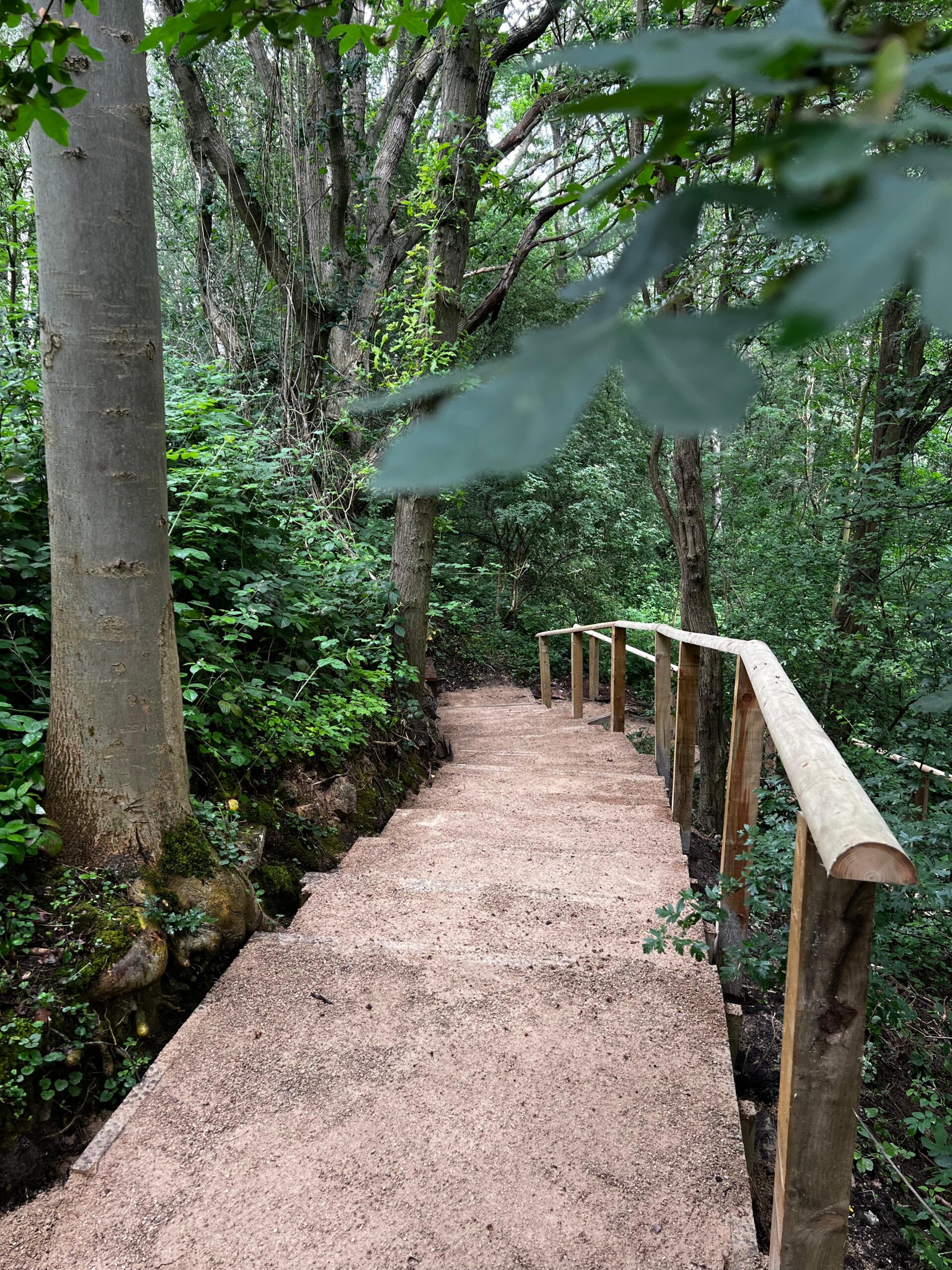
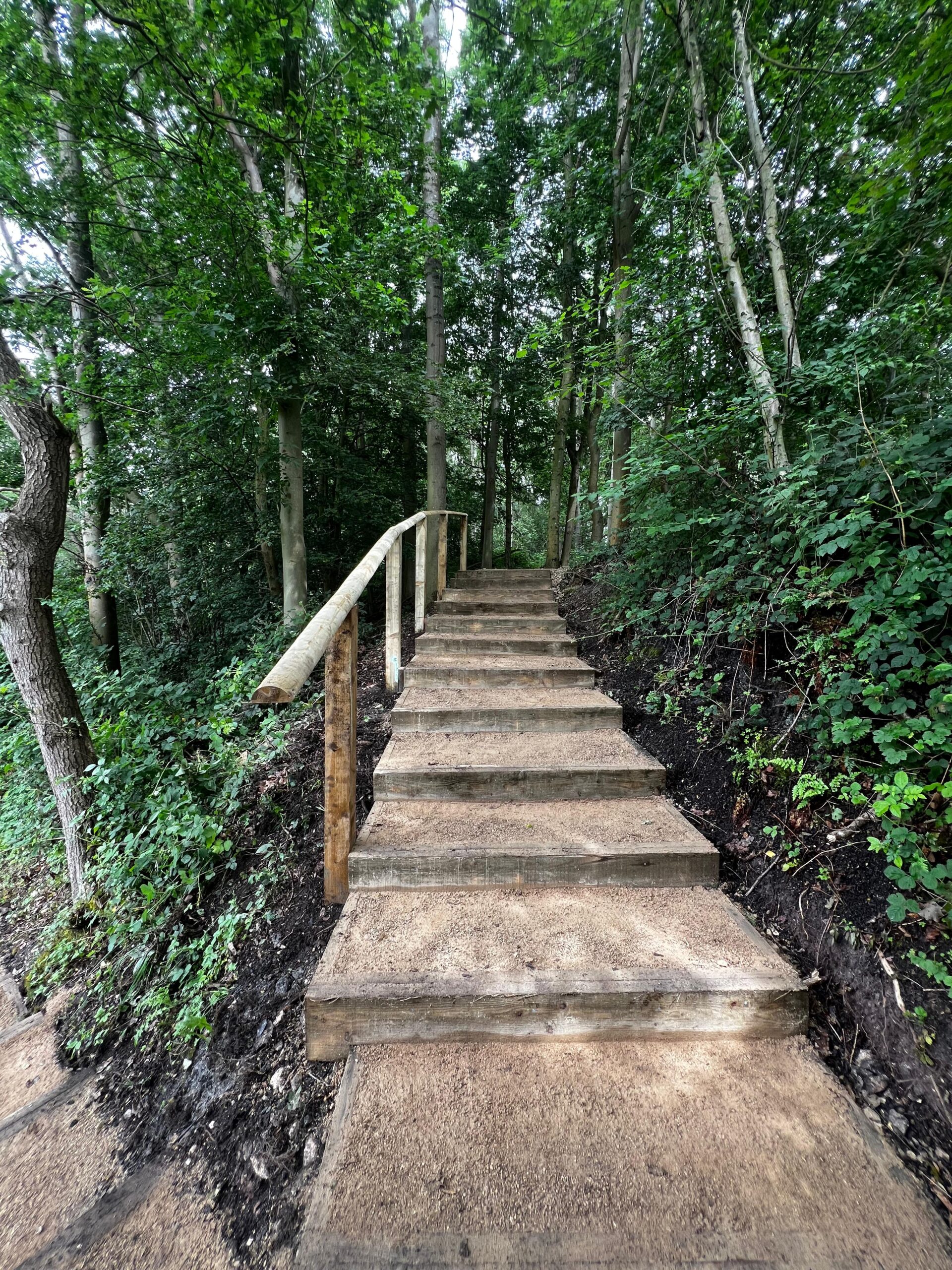
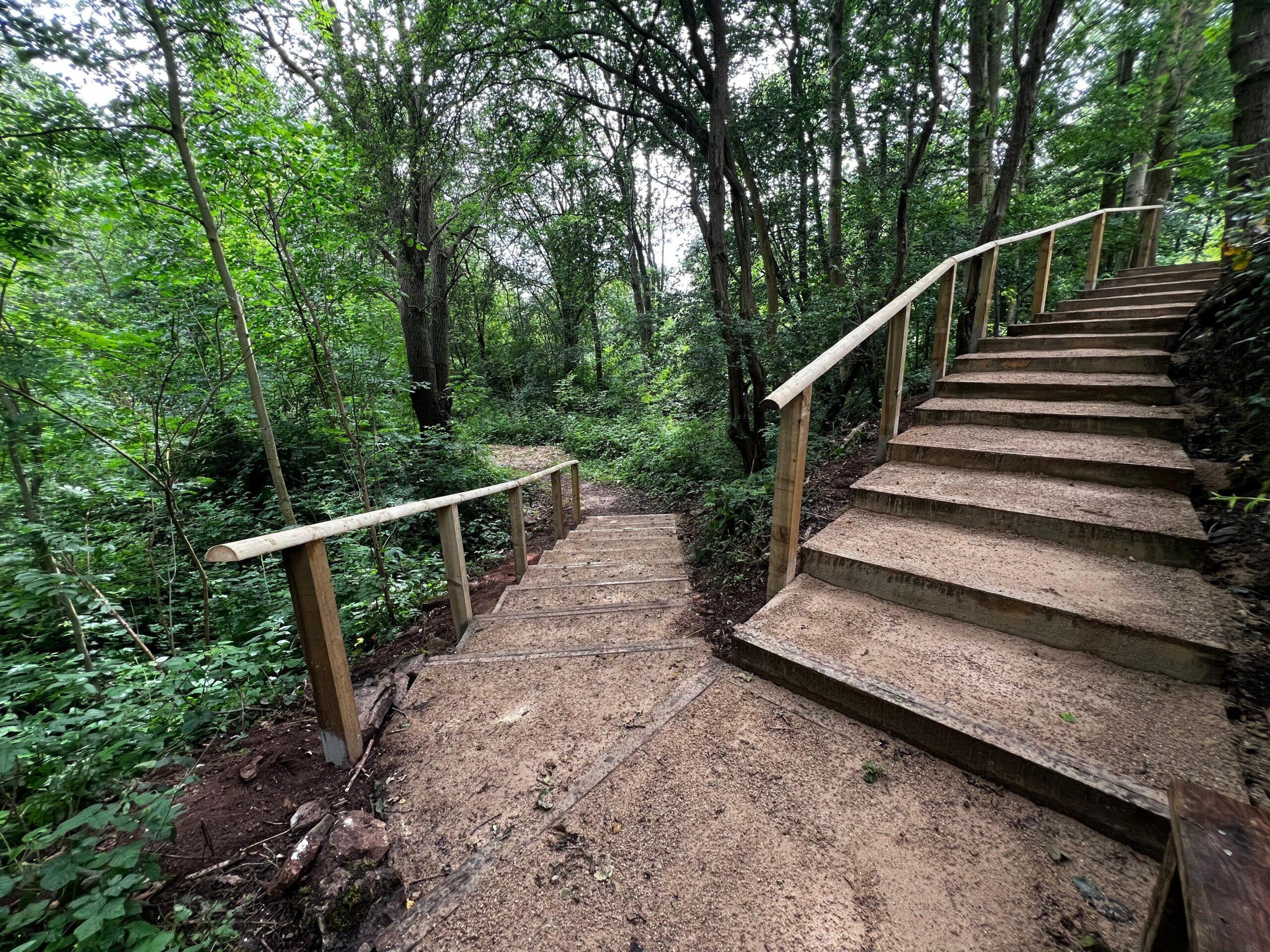
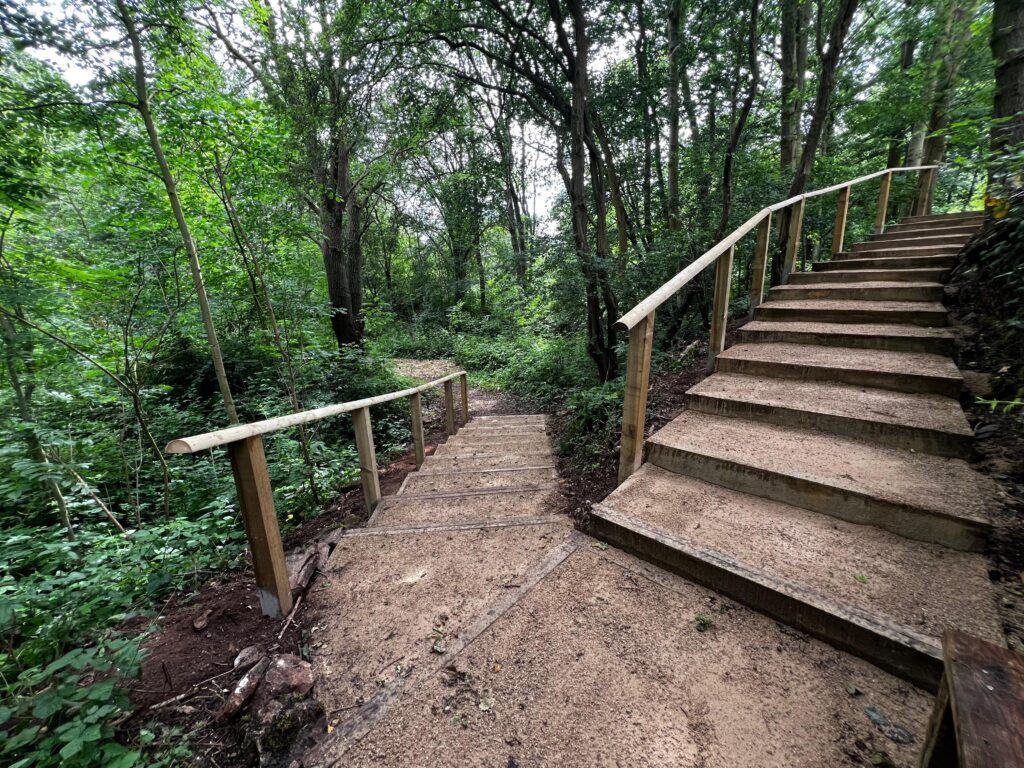
Each staircase was constructed using treated timber step boxes, secured with timber pegs and lined with geotextile membrane. The steps were filled with compacted Type 1 aggregate and finished with Golconda dust to provide a firm, durable walking surface. Timber handrails were installed along the exposed downslope sections of each staircase, and the existing bench was replaced as part of the same programme of works.
With the steps forming part of an established visitor route, the works were carefully sequenced to minimise disruption. Materials were brought into the working area as required rather than stored unnecessarily around the visitor centre and paths. Waste from the existing structures was regularly removed, and plant movements and deliveries were supervised throughout. Temporary pedestrian management was introduced where needed to keep visitors safely separated from the works.
Practical Solutions for Sensitive Sites
Projects within established nature reserves often require more than simply constructing to a drawing. Existing trees and roots, changing ground levels and other site constraints can all influence how infrastructure needs to be built. At Potteric Carr, close liaison with Yorkshire Wildlife Trust allowed us to respond to these conditions as they were encountered and make practical recommendations to improve the finished layout. The result was a durable access route that sits naturally within its surroundings while making this part of the reserve safer and easier for visitors to enjoy.
Following completion, Mike Winstanley, Head of Operations at Yorkshire Wildlife Trust, commented:
“That’s an excellent job, thank you! Great standard of work – we look forward to working with you again.”