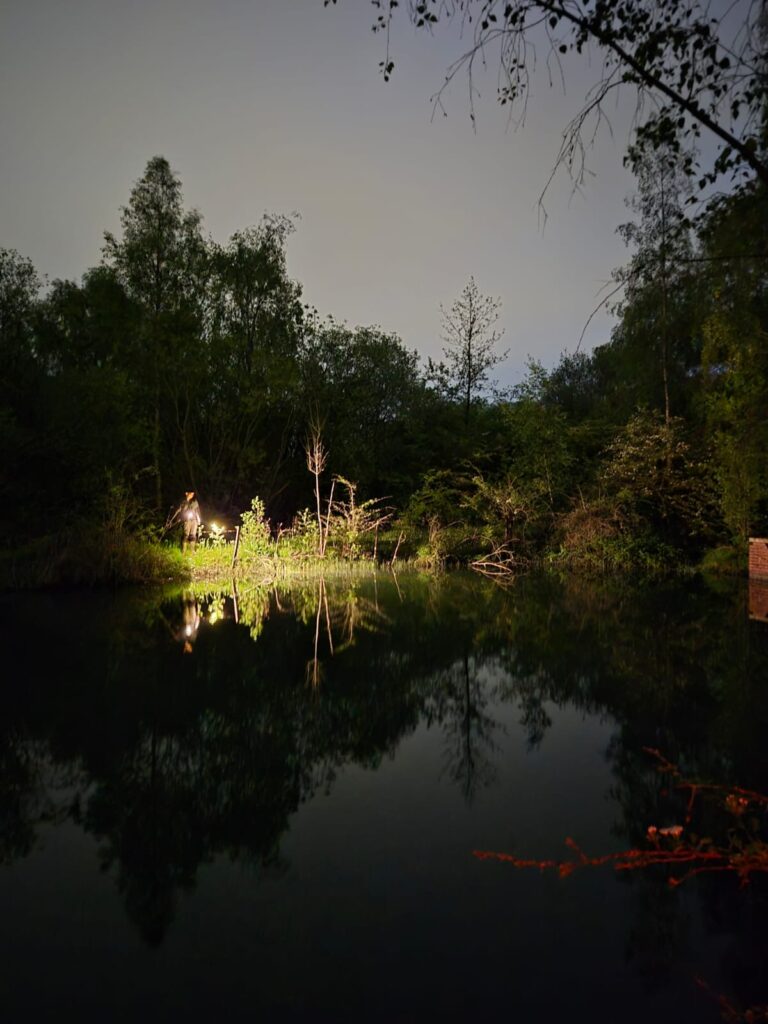
As June progresses, the end of the Great Crested Newt (GCN) survey season is rapidly approaching. For developers, landowners and project managers, understanding the timing of GCN surveys is essential. Missing the survey window can have significant implications for project programmes, planning applications and ecological assessments.
Why are Great Crested Newt surveys seasonal?
Great Crested Newts spend much of the year in terrestrial habitats, sheltering in suitable environments surrounding their breeding ponds, including rough grassland, scrub and hedgerows. During spring, adult newts migrate to ponds to breed and this season typically begins in March and continues through to June. Exact timings vary depending on weather conditions and the site characteristics. During this period, GCN are at their most active and are concentrated within breeding ponds, making them much easier to detect. Survey methods have been developed around this seasonal behaviour to maximise survey reliability and keep disturbance to a minimum.
As summer progresses, adult Great Crested Newts begin to leave breeding ponds and return to terrestrial habitats. At the same time, environmental DNA within ponds naturally degrades. Once newts are no longer consistently using ponds, survey results become less reliable, and inaccurate conclusions drawn from surveys undertaken outside the season can put the species at risk.
Survey windows are therefore carefully defined within ecological guidance, and are directly linked to protecting the species and ensuring ecological decisions are based on accurate information.
Survey Types
eDNA surveys have become a widely used method for determining whether GCN are present within a pond. Traces of genetic material e.g. skin cells, mucus, eggs and waste products are left behind, and by collecting and analysing water samples from a pond, specialist laboratories can identify whether Great Crested Newt DNA is present. eDNA surveys offer a highly effective means of determining presence and are often the first step in assessing ecological constraints on a site. eDNA surveys need to be carried out during the survey season, when breeding adults are using ponds to ensure sufficient DNA is present.
Where further information is required, traditional presence/absence surveys may be undertaken. These surveys involve multiple visits to breeding ponds using recognised techniques such as:
- Torchlight surveys
- Bottle trapping
- Egg searches
- Netting
The objective is to establish whether GCN are present and, in some cases, to assess the relative size of the population. These methods rely on detecting newts during their breeding phase, so also need to be completed during the specific survey season.
Why is early planning important?
Great Crested Newts are a material consideration within the planning process and can influence site design, project timelines, and mitigation requirements. If surveys are identified too late in the season and there is insufficient time to complete them before the survey window closes, projects risk being delayed until after the next survey season. By seeking ecological advice early, developers and landowners can identify potential constraints, determine survey requirements, and ensure works are planned effectively.
At Habitat Works, our experienced ecologists undertake eDNA surveys and presence/absence surveys across a wide range of development and conservation projects. We work closely with clients to identify survey requirements at an early stage, helping to minimise delays and ensure that ecological considerations are incorporated into project planning from the outset.
If your site contains, or is located near, ponds that may support GCN, now is the time to seek advice before the current survey season comes to an end. Contact our team on 01484 482629 or info@habitatworks.co.uk